Esta página solo está disponible en inglés. Ir a la portada en español

×

Questa pagina è disponibile solo in inglese. Home page in italiano

×

Diese Seite ist nur auf Englisch verfügbar. Zur deutschen Startseite

×

Cette page est disponible uniquement en anglais. Aller à la page d'accueil en français

×

CCF urges UK cold chain CNI status to protect food supply

The white paper sets out 10 measures to address energy instability, cyber-attacks, climate impacts, labour shortages and supply disruption.

CCF urges UK cold chain CNI status to protect food supply

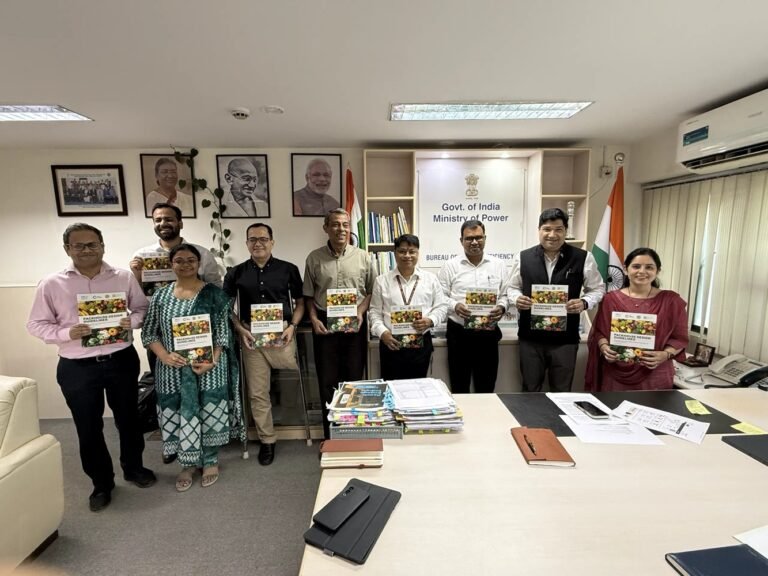
The Cold Chain Federation has launched a white paper warning that growing pressures on the UK cold chain are increasing risks to food security, public health and economic resilience.

The report, The Critical Link: A Resilience Strategy for Protecting UK Food Supply Against Growing Threats to the Cold Chain, sets out ten recommendations, including recognition of the cold chain as Critical National Infrastructure.

The white paper identifies energy instability, cyber-attacks, climate impacts, labour shortages and global supply chain disruption as risks placing pressure on critical food supply infrastructure. It says disruptions could affect food availability, affordability and access to essential products, particularly for vulnerable communities.

The Cold Chain Federation says the cold chain supports 184,000 jobs and underpins food supply across supermarkets, restaurants, schools, foodbanks, hospitals and home deliveries. The recommendations focus on preparedness and response planning, cold chain consideration in food security policy, and recognition within national resilience planning.

The launch event included remarks from Phil Pluck, CEO of the Cold Chain Federation, and Tom Southall, Deputy CEO. A panel discussion chaired by Southall included Pluck, Professor Tim Lang, Professor Emeritus of Food Policy at City St George’s, University of London, and Kristopher Gibbon-Walsh, Deputy Chief Executive Officer of FareShare and The Felix Project.

“By failing to act on food resilience planning in the UK, the government are failing to protect life essential food supplies to the UK public. The world is growing more and more unstable, and with that instability comes very real risks to food supplies from both the UK and globally,” said Phil Pluck, CEO, Cold Chain Federation. “Having created the strategy, now is the time for the government to act, and fast.”

Get the daily refrigeration briefing

One email a day. Trusted by 3,000+ RACHP professionals.

More on Cold Chain

All on Cold Chain →

Insights

Secop's Solar Direct Drive (SDD) System Earns WHO PQS Approval – The Team Behind It
Article

Secop’s Solar Direct Drive (SDD) System Earns WHO PQS Approval – The Team Behind It

Partner's material In March 2026, Secop’s Solar Direct Drive Power Management Module was granted WHO PQS prequalification and officially listed in the WHO Catalogue of Prequalified Immunization Devices. The WHO IMD-PQS (Immunization Devices Performance, Quality and Safety programme) is the global benchmark for cold chain equipment used in immunisation. Being listed in its catalogue is

22 Jun 2026
Case Study - Effect of Louvers or diffusers on air flow distribution and cooling time on a meat log during Chill cycle
Tech Guide

Case Study – Effect of Louvers or diffusers on air flow distribution and cooling time on a meat log during Chill cycle

By Kushal Aurangabadkar An experimental analysis was conducted on a cooler space measuring 3.66 m × 6.096 m (12.0 ft × 20.0 ft), equipped with an ammonia refrigeration coil, five 30 cm (12 in.) fans, and five diffusers. The study measured airflow patterns, cooling rates, and heat transfer efficiency in meat storage by testing two configurations:

Kushal Aurangabadkar · 21 Jan 2026
Total Cost of Ownership (TCO) for Modular Refrigeration Systems in Life Sciences Distribution Centers
Tech Guide

Total Cost of Ownership (TCO) for Modular Refrigeration Systems in Life Sciences Distribution Centers

by Ramez Naguib, P.E. Introduction Life sciences distribution centers are under immense pressure to deliver consistent temperature control, comply with increasingly stringent regulations, and optimize operational efficiency. Traditional built-up refrigeration systems often prove cumbersome, costly, and slow to implement. In contrast, modular, factory-assembled refrigeration systems have emerged as a compelling alternative. Drawing on lessons from

14 Jan 2026
Everything on Cold Chain: 2,039 articles, 1 case study, 23 insights

Most read this month

All news →