Esta página solo está disponible en inglés. Ir a la portada en español

×

Questa pagina è disponibile solo in inglese. Home page in italiano

×

Diese Seite ist nur auf Englisch verfügbar. Zur deutschen Startseite

×

Cette page est disponible uniquement en anglais. Aller à la page d'accueil en français

×

National Cold Vault launches LTE-M refrigeration monitoring in Ohio

The Compliance-as-a-Service offering pairs outage alerts within five seconds with automated CDC and VFC audit reporting.

National Cold Vault launches LTE-M refrigeration monitoring in Ohio

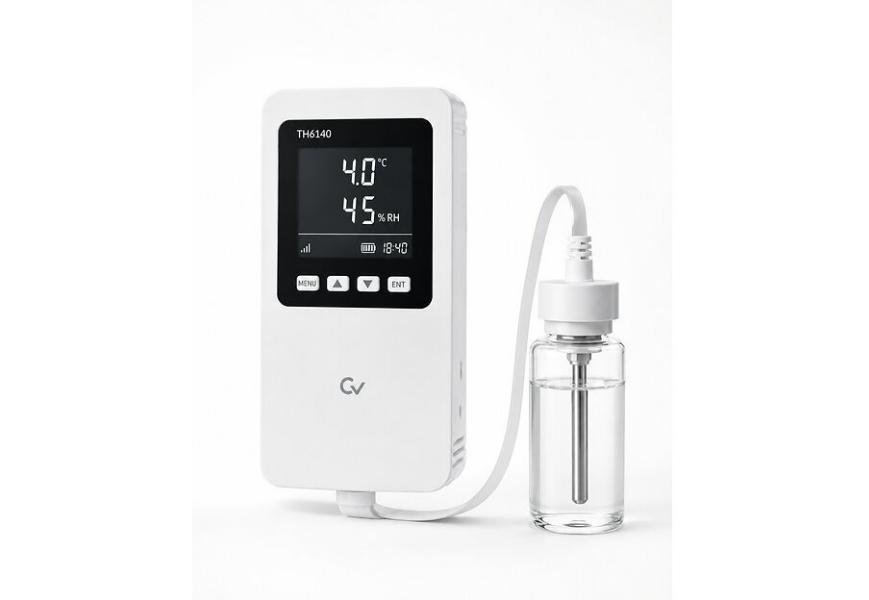
National Cold Vault LLC has launched a grid-independent refrigeration monitoring system for public health infrastructure in Ohio and private clinical networks across the United States. The company says the system is designed to detect temperature excursions during localized power failures without relying on facility Wi-Fi or building power.

The Cold-Vault Shield uses dedicated 4G LTE-M cellular nodes operating on Bands 12 and 13. During a power outage, the system sends an outbound cellular alert to facility administrators within five seconds, according to the company.

The monitoring system is intended to help facilities protect biologics, dermal neurotoxins, GLP-1 agonists and mRNA vaccines before refrigerator temperatures move outside the CDC-defined range of 2.0°C to 8.0°C (35.6°F to 46.4°F).

National Cold Vault offers the infrastructure through a Compliance-as-a-Service model. The service includes a $349 hardware setup fee and a $79.99 monthly subscription, with automated CDC and Vaccines for Children audit reporting.

The company also ships facilities a newly calibrated, NIST-traceable, glass-bead-buffered platinum RTD probe every 12 months as part of the hardware lifecycle.

“Relying on a facility’s Wi-Fi network to monitor $100,000 in clinical biological assets is a structural actuarial liability,” said Sean Lin, Director of Operations & Compliance at National Cold Vault. “We have engineered a zero-trust telemetry circuit breaker. By isolating the monitoring hardware from the building’s power grid, we provide absolute thermodynamic asset preservation for independent pharmacies, medical spas, and government distribution pipelines.”

Get the daily refrigeration briefing

One email a day. Trusted by 3,000+ RACHP professionals.

More on Cold Chain

All on Cold Chain →

Insights

Secop's Solar Direct Drive (SDD) System Earns WHO PQS Approval – The Team Behind It
Article

Secop’s Solar Direct Drive (SDD) System Earns WHO PQS Approval – The Team Behind It

Partner's material In March 2026, Secop’s Solar Direct Drive Power Management Module was granted WHO PQS prequalification and officially listed in the WHO Catalogue of Prequalified Immunization Devices. The WHO IMD-PQS (Immunization Devices Performance, Quality and Safety programme) is the global benchmark for cold chain equipment used in immunisation. Being listed in its catalogue is

22 Jun 2026
Case Study - Effect of Louvers or diffusers on air flow distribution and cooling time on a meat log during Chill cycle
Tech Guide

Case Study – Effect of Louvers or diffusers on air flow distribution and cooling time on a meat log during Chill cycle

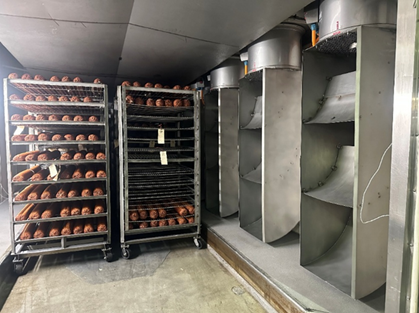
By Kushal Aurangabadkar An experimental analysis was conducted on a cooler space measuring 3.66 m × 6.096 m (12.0 ft × 20.0 ft), equipped with an ammonia refrigeration coil, five 30 cm (12 in.) fans, and five diffusers. The study measured airflow patterns, cooling rates, and heat transfer efficiency in meat storage by testing two configurations:

Kushal Aurangabadkar · 21 Jan 2026
Total Cost of Ownership (TCO) for Modular Refrigeration Systems in Life Sciences Distribution Centers
Tech Guide

Total Cost of Ownership (TCO) for Modular Refrigeration Systems in Life Sciences Distribution Centers

by Ramez Naguib, P.E. Introduction Life sciences distribution centers are under immense pressure to deliver consistent temperature control, comply with increasingly stringent regulations, and optimize operational efficiency. Traditional built-up refrigeration systems often prove cumbersome, costly, and slow to implement. In contrast, modular, factory-assembled refrigeration systems have emerged as a compelling alternative. Drawing on lessons from

Ramez Naguib · 14 Jan 2026
Everything on Cold Chain: 2,061 articles, 2 case studies, 23 insights

Most read this month

All news →